TPU vs Nylon: What Waterproof Bag Manufacturers Prefer
The waterproof bags are suitable for outdoor use, sports games and daily storage and are generally used to protect against water. There are two popular materials for manufacturing: TPU and nylon. They each have their own level of strengths, costs and handling properties. There is no universal rule in place for determining which type is likely to be the best waterproof bag manufacturer for a given product based on durability or cost considerations. There is no rule of thumb for choosing the manufacturer of a waterproof bag based on the product, durability and price.
What the TPU Material Offers
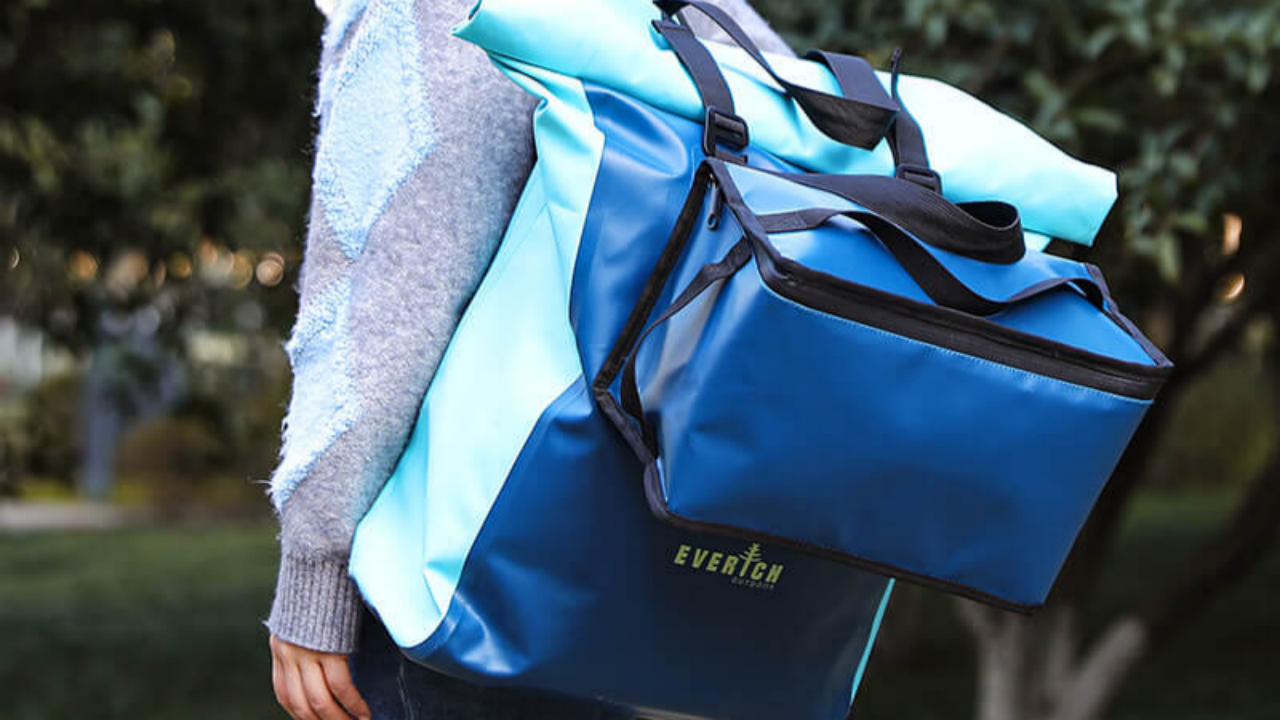
TPU has high waterproof performance. It forms an effective barrier against water, even in heavy rain or during wet weather. It also won’t crack when bent, which makes it great for outside, continuous use. TPU surfaces can sometimes be smooth, making post-use clean-up easier. In certain waterproof cooler bags and backpacks, where water protection is essential for outdoor activities, Everich Outdoor has adopted TPU-based materials.
What Nylon Material Offers
Nylon is lighter and more flexible compared to TPU. It’s common in outdoor bags as it has strength but is not difficult to carry. Nylon is not waterproof by itself, and typically needs coatings to be waterproof. It is additionally more breathable than TPU. Many manufacturers choose nylon because it is lighter and more comfortable than Teflon, but it doesn’t provide complete waterproofing.
Water Resistance Comparison
TPU provides stronger direct water blocking because it is naturally waterproof. Nylon depends on coatings, which can wear down over time with repeated use. This means TPU generally performs better in heavy rain or wet environments. Everich Outdoor applies TPU layers in some waterproof bag designs to improve long-term water resistance in harsh outdoor conditions.
Weight Difference Between Materials
Weight is important in outdoor products. Nylon is typically lighter, making it useful for hiking bags and travel packs. This is because TPU is so compact. But TPU can also reduce the need for additional waterproof coatings, thereby balancing overall design. The material’s weight will be determined by how users are expected to carry and use the bag.
Durability in Outdoor Use
Both materials are strong and have different characteristics. TPU is resistant to water and abrasion, and may be stiffer. Nylon handles are stretchable and bendable, but can wear if the coating wears off. Both materials are frequently used together in multi-layered designs for rough use. Everich Outdoor adds TPU-reinforced nylon stitching to its backpacks, making them stronger for outdoor use.
Flexibility and Comfort
Unlike nylon, other fabrics are less flexible and thus bend or fold less easily, and cannot be stored in the same manner. Designed for soft bags that fit in small spaces, TPU is not as flexible, but it retains its shape, making it good for structured waterproof storage. Manufacturers tend to choose based on the product’s requirements for structure or soft packing.
Cost Differences
Cost is another key factor in material choice. Nylon is generally cheaper to produce, especially in large volumes. TPU is more expensive due to its material processing and performance benefits. This affects product pricing in wholesale markets. Everich Outdoor produces both TPU and nylon waterproof bags to match different price ranges in bulk supply orders.
Environmental Considerations
Some manufacturers also look at environmental impact. TPU is more difficult to recycle, but lasts longer in use. Nylon can be partially recycled, though coating layers may impact quality. Both materials are being improved for sustainability. Everich Outdoor offers recycled-material options across parts of its waterproof bag range to reduce raw material waste during production.
Use Case Selection
Determination of material type may be dependent on the intended application. TPU is recommended for watery weather, such as boating, fishing, and rainy weather. For hiking, travel and light outdoor use, comfort is more important than complete waterproofing, so nylon is preferred. Suppliers make decisions on the selection of materials according to the demands of customers and their anticipated conditions of use.
Manufacturing Process Differences
TPU can be heat-bonded and sealed; nylon is usually stitched and coated. This alters production time and equipment requirements. The processing steps of TPU products may be more controlled than those of nylon bags. To process the various waterproof bag designs, Everich Outdoor has separate production lines for sealing and stitching, both of which use TPU and nylon.
Conclusion
While both TPU and nylon are used in the production of waterproof bags, they each have their own specific applications. TPU provides more water protection and durability in wet conditions, and nylon is lighter and more flexible for general wear. Their selection depends on the usage, cost and performance. Some suppliers, such as Everich Outdoor, work with both materials in order to meet a wider demand for outdoor and travel products, thus providing each user with the type of product that is appropriate.